Research
My research examines how regulatory systems and institutional design shape incentives, allocate risk, and influence long-term stability across markets and governance systems. I analyze these dynamics across sectors including sports, financial regulation, healthcare policy, and environmental governance.
Decentralisation, Regulation, and Regional Inequality in Health Care Systems
This essay examines whether health care decentralisation leads to a “race to the bottom” in health care provision and whether it increases regional health care inequality. It argues that decentralisation does not inevitably produce either outcome, but that it frequently intensifies territorial inequality by redistributing responsibility across regions with unequal fiscal and institutional capacity. Drawing on examples from Italy, Spain, the United States, and the United Kingdom, the essay demonstrates how decentralised systems may generate divergence in access, infrastructure, and service quality despite maintaining formal universal entitlements.
Abstract
This essay examines whether health care decentralisation leads to a “race to the bottom” in health care provision and whether it increases regional health care inequality. It argues that decentralisation does not inevitably produce either outcome, but that it frequently intensifies territorial inequality by redistributing responsibility across regions with unequal fiscal and institutional capacity. Drawing on examples from Italy, Spain, the United States, and the United Kingdom, the essay demonstrates how decentralised systems may generate divergence in access, infrastructure, and service quality despite maintaining formal universal entitlements. It further argues that fragmented procurement and weak coordination within decentralised systems can strengthen incumbent firms and reinforce technological inequality, particularly within digital health markets. While decentralisation may improve responsiveness and encourage policy innovation, its benefits depend heavily on strong national standards, redistributive mechanisms, and regulatory coordination.
Introduction
Universal health systems are meant to guarantee equal access to care regardless of where people live. Practically, though, decentralised systems often produce large regional differences in waiting times, infrastructure, and quality of treatment. The tension between local autonomy and national equality has become one of the central problems in modern health care governance.
Yet decentralisation also changes the institutional foundations of health care governance. It redistributes fiscal responsibility and regulatory authority across territories with unequal resources and administrative capacity. In doing so, it may weaken coordination, fragment oversight, and intensify regional disparities in access and quality. The central tension is therefore not simply whether decentralisation improves efficiency, but whether it can preserve solidarity and minimum standards across unequal regions.
Although decentralisation can improve responsiveness to local needs, it also risks deepening inequality between regions with very different resources and administrative capacity. Decentralization rarely produces an explicit “race to the bottom” through formal removal of entitlements. Instead, downward pressure on standards tends to emerge more gradually through fragmented oversight, delayed investment, workforce shortages, and uneven regulatory enforcement. This essay therefore argues that decentralisation is most likely to weaken equity where strong redistributive mechanisms and national guarantees are absent.
The essay first outlines the theoretical relationship between decentralisation and regulation before examining how decentralised governance can create fiscal and regulatory pressures that gradually weaken service quality. It then explores evidence from Italy, Spain, the United States, and the United Kingdom to demonstrate how decentralisation frequently produces territorial divergence in access, institutional capacity, and infrastructure. Finally, it argues that decentralisation may also reinforce regional monopolies and digital fragmentation through procurement structures and interoperability barriers. The essay concludes that decentralisation is best understood as a conditional institutional arrangement whose outcomes depend heavily on the strength of national guarantees and redistributive mechanisms.
Decentralisation and the Governance of Health Care
Decentralisation is not a single institutional reform. It can involve political decentralisation, where elected regional governments gain authority over health policy; administrative decentralisation, where managerial responsibilities are delegated to local bodies; or fiscal decentralisation, where regions assume greater responsibility for financing and budget allocation. These forms of decentralisation often overlap, although not always in equal measure.
Health systems are highly regulated institutional environments in which regulation involves rule-setting, monitoring, and enforcement rather than just legislation (Baldwin, Cave, and Lodge, 2012). In health care, regulation includes licensing professionals, setting waiting-time targets, regulating pharmaceuticals, inspecting hospitals, and maintaining patient safety standards. Once these functions are distributed across multiple territorial levels, accountability may become fragmented and enforcement uneven.
Decentralisation has increasingly been associated with broader shifts toward territorial governance and citizen-centred welfare systems (Costa-Font, 2020) . Essentially, local authorities may possess greater knowledge of regional needs than distant central ministries. Rural regions, for example, often face different workforce and infrastructure challenges from large urban centres. Decentralisation may therefore improve responsiveness and permit policy experimentation.
However, decentralisation also exposes pre-existing territorial inequalities. Regions differ significantly in wealth, workforce, supply, tax base, and administrative capacity. The performance of decentralised systems depends heavily on the extent to which redistributive and equalisation mechanisms remain strong (Costa-Font and Greer, 2012). In other words, decentralisation itself is not inherently beneficial or harmful. Its effects depend on the institutional conditions surrounding it.
This distinction is particularly important in health care because health systems are not purely economic institutions. Health care markets differ from standard competitive markets because of uncertainty and information asymmetry (Arrow, 1963). Health systems therefore rely heavily on collective guarantees and regulation. Decentralisation may improve local flexibility, but excessive fragmentation can weaken those guarantees. From a regulatory perspective, it creates a persistent tension between efficiency, local autonomy and substantive equality across territories.
The result is a tension between territorial autonomy and regulatory coordination. While advocates of decentralised governance often assume that local flexibility improves efficiency and responsiveness, regulatory theory suggests that fragmentation may also weaken accountability by dispersing authority across multiple institutions. The central issue is not simply whether regions possess autonomy, but whether decentralised systems remain mechanisms capable of preserving substantive equality across territories with unequal administrative capacity.
Decentralisation, Regulatory Competition, and Territorial Inequality
The ‘race to the bottom” within health care can operate differently from classic models of regulatory competition. Regional governments are rarely competing to attract investment through openly lower welfare standards. Instead, downward pressure emerges more indirectly through fiscal strain, uneven regulatory capacity, and fragmented oversight. Patients may still technically be entitled to treatment, but long waiting lists and staffing shortages can and will make access more difficult.
Italy illustrates many of these dynamics. Although the Italian National Health Service guarantees universal legal entitlements, regional governments possess significant responsibility over financing and delivery. Research on the Italian health system suggests that regionalisation widened pre-existing north-south inequalities in financing and patient mobility (France, Taroni, and Donatini, 2005). Wealthier northern regions increasingly attracted patients from southern regions for specialist treatment, reflecting differences in institutional capacity and perceived quality. Decentralisation did not create these inequalities, but it embedded them more deeply within the structure of the system. In effect, regional inequality became institutionalised rather than temporary, and this case suggests that decentralisation works far better in wealthier regions than poorer ones.
Equal expenditure across decentralised regions did not necessarily produce equal satisfaction or perceived access, particularly where governance quality remains uneven (Costa-Font and Turati, 2018). Governance quality and institutional effectiveness remained uneven despite comparable levels of spending. This is particularly important because it demonstrates that decentralisation is not simply a question of funding. Institutional capacity itself becomes unevenly distributed across regions.
These pressures became more visible after the global financial crisis of 2008. Regions facing fiscal strain frequently delayed infrastructure projects, limited workforce expansion, and restricted service investment. Such measures may appear administratively rational in the short term, yet over time they can contribute to gradual erosion in service quality. The race to the bottom in health care is therefore rarely dramatic or openly ideological. More often, it appears through cumulative deterioration in access and capacity.
The United States provides another important example of a decentralised divergence. Medicaid is jointly financed by federal and state governments, but states retain considerable discretion over implementation, reimbursement rates, and eligibility criteria. Following the Affordable Care Act (ACA), some states expanded Medicaid coverage while others refused expansion. By 2023, ten states still had not adopted expansion, leaving substantial gaps in coverage for low-income populations (Glied and Weiss, 2023). As a result, low-income populations experienced sharply different levels of access depending on geography.
This does not represent a classic race to the bottom in every case, since some states pursued more expensive policies than others. Nevertheless, the American system clearly demonstrates how decentralisation permits territorial divergence in access and generosity. In this sense, decentralisation shifts health care access from a universal social guarantee towards a system where the quality of care increasingly depends on geography. States facing political or fiscal pressures may restrict coverage or maintain lower provider payments, which in turn shapes practical access to care.
Races to the bottom may also emerge through weakened enforcement rather than direct spending reductions. Effective regulation depends not only on formal rules but on monitoring and enforcement capacity (Baldwin, Cave, and Lodge, 2012). National standards lose significance if regional institutions cannot implement them consistently. Abimbola (2020) conceptualises health governance as a triangle of rules, actors, and institutions, highlighting the gap that may emerge between formal policy and institutional reality. National guarantees may remain universal on paper while implementation varies substantially across regions with unequal administrative capacity.
The Covid-19 pandemic exposed many of these coordination problems. The Covid-19 pandemic exposed problems within fragmented multilevel governance structures, particularly where responsibilities between national and regional authorities were unclear (Angelici et al., 2023). In several decentralised systems, procurement, information-sharing, and crisis management became more difficult because authority was dispersed across multiple levels of government.
Decentralisation, however, can produce genuine benefits. Local authorities may be more responsive to demographic variation, regional disease burden, and patient preferences. Devolved systems can also function as policy laboratories where innovation spreads through imitation. Evidence from the English NHS demonstrates that competition under certain institutional conditions can improve performance. Under some institutional conditions, it has been shown that competition may improve some aspects of public hospital performance in England (Cooper, Gibbons, and Skellern, 2018). This suggests that decentralisation and competition are not inherently damaging.
These improvements depended heavily on strong national oversight and relatively uniform institutional capacity. The NHS remained centrally financed and nationally regulated despite local variation. Decentralisation therefore appears to function most effectively where strong national guarantees remain intact.
Territorial Inequality and Digital Fragmentation
The evidence that decentralisation increases territorial inequality is stronger and more consistent than the evidence for races to the bottom. Regions differ substantially in wealth, tax capacity, workforce availability, and infrastructure. Once authority is devolved, these differences become more consequential. Wealthier regions are often better positioned to recruit clinicians, finance specialist services, and invest in digital systems.
Health inequalities are closely tied to broader social determinants such as income, education, and employment (Marmot, 2005). Decentralisation may intensify these inequalities because poorer regions frequently experience both weaker population health and lower institutional capacity simultaneously. Effectively, the territories with the greatest health needs are often least able to sustain high-quality services.
Italy again provides one of the clearest examples of decentralisation contributing to territorial inequality. Significant north-south differences persist in waiting times, hospital quality, and financial performance despite universal legal entitlements. Patient mobility is especially revealing. Residents of southern regions frequently travel north for specialist treatment, particularly for more complex procedures. While formally compatible with patient choice, this movement reflects unequal confidence in regional systems.
Geographic inequality also overlaps with class inequality. Wealthier patients are often more able to travel for specialist treatment or seek private alternatives. Poorer patients remain far more dependent on local services.
Spain’s health system is similarly decentralised, with autonomous communities exercising major authority over service delivery and planning. Although Spain retains strong universalist commitments, decentralisation has produced visible differences in waiting times, staffing, and organisational performance across regions. The Covid-19 pandemic highlighted many of these disparities. Regional responses varied considerably, revealing tensions between local autonomy and national coordination. While decentralisation allowed flexibility, it also exposed uneven preparedness and fragmented governance structures.
Territorial inequality is also evident within the United Kingdom. Differences in local commissioning and devolved governance have contributed to what is frequently described as the “postcode lottery,” where access to certain treatments or services varies by region. Some degree of local variation may reflect democratic choice or regional preference. Once differences affect core services such as mental health provision, specialist drugs, or fertility treatment, territorial variation becomes politically contentious. Universal systems are generally expected to provide a minimum standard of care regardless of geography.
One of the less discussed consequences of decentralisation concerns digital infrastructure and procurement power. Decentralised systems are often justified on the grounds that local procurement encourages competition and innovation. Fragmented purchasing structures may weaken bargaining power and strengthen incumbent firms. Rather than producing genuinely competitive markets, decentralisation can allow dominant vendors to consolidate territorial control incrementally across separate regional systems.
Electronic health record systems (EHR) provide a useful example. Once a hospital network adopts a dominant platform, switching becomes financially and operationally difficult. As a result, interoperability itself increasingly becomes a regulatory issue rather than simply a technical one. Decentralised procurement allows vendors to establish strong regional positions incrementally, often creating forms of territorial lock-in.
In effect, procurement processes are frequently shaped less by open competition than by compatibility with incumbent systems already embedded within regional hospital networks. Interoperability concerns and switching costs can narrow the field of competitors before formal procurement begins. Smaller firms may therefore struggle to enter markets that are formally decentralised but practically dominated by established vendors.
This dynamic has broader implications for inequality. Wealthier systems are often better able to finance technological transitions or negotiate favourable contracts, while poorer regions remain dependent on outdated infrastructure. Decentralisation may therefore contribute not only to service divergence but also to technological fragmentation. Layered governance structures can diffuse accountability across multiple institutions and weaken coordinated oversight (Van de Bovenkamp, Stoopendaal, and Bal, 2017). In fragmented systems, no single authority may possess sufficient leverage to impose interoperability standards or discipline dominant firms effectively. Rather than producing genuinely competitive markets, decentralisation may therefore encourage territorially segmented monopolies alongside uneven digital capacity.
Conclusion
Overall, the evidence suggests that decentralisation usually increases regional inequality unless strong national safeguards remain in place. The problem is less about decentralisation itself and more about whether poorer regions still receive enough support to maintain comparable standards of care.
The race to the bottom in health care is rarely explicit. More commonly, it emerges through slower investment, staffing shortages, weaker enforcement, and growing waiting times. Regional inequality, meanwhile, is more visible and more consistently documented. Wealthier or administratively stronger regions tend to provide better infrastructure, stronger digital systems, and faster access to care than weaker territories.
It has been shown that decentralisation can produce genuine benefits where strong national safeguards remain intact. Local responsiveness and experimentation may improve service delivery under conditions of effective coordination and fiscal equalisation. The problem is therefore not decentralisation alone, but decentralisation without solidarity. The real challenge is deciding how much regional freedom health systems can allow before equal access to care starts breaking down.
Health care systems depend not only on efficiency but on collective guarantees of access and quality. Systems that decentralise authority while maintaining strong national standards and redistributive mechanisms appear to be best positioned to balance flexibility with equity. Without those safeguards, decentralisation risks allowing geography to shape both the quality and accessibility of care.
Works Cited
Abimbola, S. (2020) ‘Health system governance: a triangle of rules’, BMJ Global Health.
Angelici, M., Berta, P., Costa-Font, J. and Turati, G. (2023) Divided We Survive? Multi-Level Governance during the Covid-19 Pandemic.
Arrow, K.J. (1963) ‘Uncertainty and the welfare economics of medical care’, The American Economic Review.
Baldwin, R., Cave, M. and Lodge, M. (2012) Understanding Regulation: Theory, Strategy and Practice. 2nd edn. Oxford: Oxford University Press.
Cooper, Z., Gibbons, S. and Skellern, M. (2018) ‘Does competition from private surgical centres improve public hospitals’ performance? Evidence from the English National Health Service’, Journal of Public Economics.
Costa-Font, J. (2020) The Political Economy of Health and Healthcare. Cambridge: Cambridge University Press.
Costa-Font, J. and Greer, S.L. (2012) Federalism and Decentralization in European Health and Social Care.
Costa-Font, J. and Turati, G. (2018) ‘Regional healthcare decentralization in unitary states: equal spending, equal satisfaction?’, Regional Studies.
France, G., Taroni, F. and Donatini, A. (2005) ‘The Italian health-care system’, Health Economics.
Glied, S.A. and Weiss, M.A. (2023) ‘Impact of the Medicaid Coverage Gap: Comparing States That Have and Have Not Expanded Eligibility’.
Marmot, M. (2005) ‘Social determinants of health inequalities’, The Lancet.
van de Bovenkamp, H.M., Stoopendaal, A. and Bal, R. (2017) ‘Working with layers: the governance and regulation of healthcare quality in an institutionally layered system’, Public Policy and Administration.
Financial Regulators and a Competitiveness Objective
Whether financial regulators should be given a competitiveness objective is a question that has gained increasing attention in recent years, particularly in jurisdictions that seek to maintain their position as global financial centres. Proponents argue that requiring regulators to consider competitiveness would encourage efficient regulation and support innovation in financial markets. However, critics worry that introducing such an objective risks weakening regulators’ primary mandates.
*Shortened from original version 5/20/2026
Introduction
Whether financial regulators should be given a competitiveness objective is a question that has gained increasing attention in recent years, particularly in jurisdictions that seek to maintain their position as global financial centres. Proponents argue that requiring regulators to consider competitiveness would encourage efficient regulation and support innovation in financial markets. However, critics worry that introducing such an objective risks weakening regulators’ primary mandates. This essay argues that although competitiveness may be a relevant contextual consideration, making it a formal objective is unlikely to enhance regulators’ ability to protect consumers, promote prudential resilience, or maintain financial stability. Instead, it risks creating conflicts between regulatory priorities. The essay will first explain why financial regulation prioritises stability and consumer protection, then consider the arguments in favour of a competitiveness objective, before evaluating why these arguments are ultimately unconvincing.
Financial regulation prioritises stability and consumer protection
A starting point for assessing the competitiveness debate is understanding why financial regulation exists in the first place. Financial markets are prone to several types of market failure, including information asymmetries, externalities and systemic risk. Individual financial institutions may take decisions that appear rational from their own perspective but create risks for the wider system. Because financial institutions are highly interconnected, the failure of one firm can spread rapidly through the system. The global financial crisis demonstrated how weaknesses in regulation and risk management can trigger widespread instability and severe economic consequences. For this reason, modern regulatory frameworks focus heavily on prudential supervision, capital requirements and mechanisms for managing failing institutions. These tools are designed primarily to ensure that financial institutions remain resilient and that consumers are protected from harmful practices.
The main argument in favour of a competitiveness objective
Supporters of a competitiveness objective argue that regulators should not focus exclusively on risk reduction without considering the broader economic impact of regulation. Financial services contribute significantly to economic growth, employment and tax revenues in many countries. If regulatory requirements are perceived as excessively burdensome, firms may relocate activities to jurisdictions with more favourable rules. According to this argument, requiring regulators to consider competitiveness could encourage them to design rules that achieve regulatory goals without imposing unnecessary costs. In theory, this might help ensure that regulation remains proportionate while allowing financial markets to continue supporting economic growth.
Competitiveness could encourage more efficient regulation
One potential benefit of a competitiveness objective is that it might encourage regulators to pay greater attention to the efficiency and design of regulatory frameworks. Financial regulation can sometimes become overly complex, with detailed rules that are difficult for both firms and supervisors to implement effectively. Excessive complexity can increase compliance costs without necessarily improving outcomes. If regulators are required to consider competitiveness, they may be more likely to simplify regulatory frameworks or focus on clear and effective principles. In this sense, a competitiveness objective could potentially lead to more proportionate regulation that achieves stability while avoiding unnecessary burdens on firms.
However, competitiveness creates tensions with core regulatory objectives
Despite these potential advantages, introducing a competitiveness objective creates a fundamental tension with regulators’ primary responsibilities. Financial regulators are normally tasked with protecting consumers and ensuring the safety and soundness of financial institutions. If competitiveness becomes part of their mandate, regulators may face situations in which these objectives conflict. For example, stronger capital requirements might improve financial resilience but also make a jurisdiction less attractive to financial firms. In such cases, regulators could come under pressure to prioritise competitiveness over prudential safeguards. This tension is problematic because regulatory decisions should primarily be guided by considerations of systemic risk rather than by concerns about attracting financial activity.
Regulatory competition may increase systemic risk
Historical experience suggests that emphasising competitiveness within financial regulation can create incentives for regulatory competition. Before the global financial crisis, some jurisdictions adopted relatively permissive regulatory approaches in order to attract financial activity. This contributed to a broader “race to the bottom”, where regulators were reluctant to impose stricter requirements for fear of losing business to other jurisdictions. While this strategy may have provided short-term economic benefits, it ultimately allowed risks to accumulate across the financial system. When the crisis occurred, the resulting instability imposed significant costs on economies and societies. This experience highlights the danger of allowing competitiveness considerations to influence regulatory standards.
Competitiveness is not necessarily a regulatory function
Another reason to question a competitiveness objective is that financial regulators may not be the appropriate institutions to pursue this goal. Their expertise lies in supervision, risk assessment and enforcement of financial rules. Promoting economic growth or international competitiveness is generally a broader policy objective that falls within the responsibility of governments rather than regulators. Governments have a range of policy tools available to support competitiveness, including tax policy, infrastructure investment and trade policy. Assigning this responsibility to financial regulators risks blurring institutional roles and potentially compromising regulatory independence.
Consumer protection could also be weakened
A further concern is the potential impact on consumer protection. Financial products and services are often complex, making it difficult for consumers to fully understand the risks involved. Regulators therefore play an important role in ensuring transparency, preventing misconduct and enforcing standards of fair treatment. Strong consumer protection rules can sometimes increase compliance costs for financial firms, which might appear inconsistent with a competitiveness objective. If regulators are expected to promote competitiveness, they may become more reluctant to impose strict conduct standards. Over time, this could weaken consumer protections and undermine confidence in financial markets.
Stability itself supports competitiveness
It is also important to recognise that financial stability can itself contribute to competitiveness. Financial markets function most effectively when participants trust that institutions are well regulated and that systemic risks are properly managed. A regulatory framework that prioritises stability and integrity can make a financial centre more attractive in the long term. Conversely, a reputation for weak regulation may deter investors and undermine confidence in the financial system. From this perspective, strong regulation and competitiveness are not necessarily in conflict. Ensuring resilience and consumer protection may actually strengthen the long-term competitiveness of a financial sector.
Conclusion
In conclusion, while there are some arguments in favour of giving financial regulators a competitiveness objective, the risks associated with such an approach are significant. Competitiveness considerations may encourage regulators to think about efficiency and proportionality in regulation. However, embedding competitiveness within regulators’ mandates creates potential conflicts with their core responsibilities of protecting consumers and maintaining financial stability. Historical experience also suggests that regulatory competition can contribute to systemic vulnerabilities. For these reasons, competitiveness is better addressed through broader economic policy rather than through the objectives of financial regulators. Maintaining strong and credible regulatory frameworks remains the most reliable way to ensure both stability and the long-term success of financial markets.
Comfort and Participation in Political Discussions in Shared Spaces
This research examines how institutional environments and social structures shape participation, expression, and governance legitimacy in shared public spaces. It explores how institutional context influences engagement and decision-making processes.
In recent years, the role of political discourse in shared spaces such as classrooms, lectures, and professional environments has become increasingly complex. While these spaces are often promoted as forums for open dialogue, many individuals report feeling reluctant to engage in political discussions due to various social, ideological, and institutional factors. This study examines the degree to which individuals feel comfortable participating in political conversations in public and professional settings and identifies the key conditions that either enable or inhibit their willingness to speak.
A quantitative survey was administered to a diverse group of respondents, including high school and university students, graduate students, educators, and corporate professionals. A small subset of respondents also identified as “Other,” which may include stay-at-home parents, unemployed individuals, or those outside traditional academic or corporate roles. The survey included 17 questions and incorporated multiple-choice, Likert-scale, and optional short-answer formats. 103 complete responses were collected and analyzed.
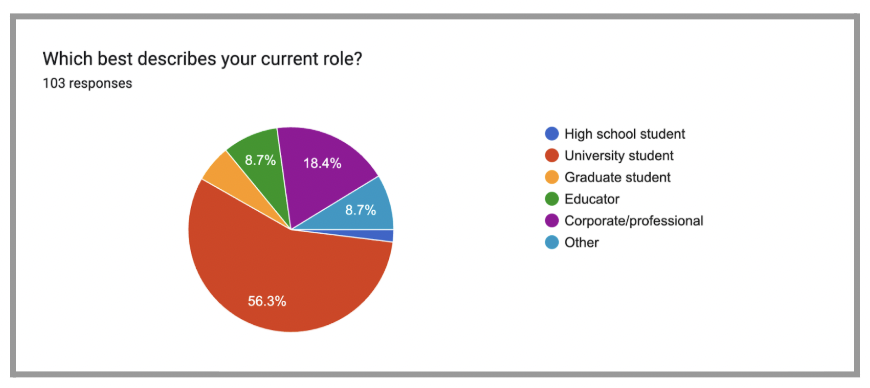
Chart 1
The data reveals a widespread pattern of disengagement from political discussion, with over 85 percent of respondents reporting that they had at some point avoided speaking in a public or professional context due to the political nature of the topic. This avoidance occurred even in contexts where respondents were not asked to share their personal political beliefs directly. The mere presence of political framing, terminology, or ideologically charged material was enough to discourage many from participating. This suggests that the hesitation is not necessarily a response to personal disagreement with content, but to the perceived social dynamics and risks associated with political discourse in general.
The survey results highlight a notable pattern of political disengagement in both public and professional spaces. Specifically, 85.4% of respondents reported having avoided political discussions at some point due to the political nature of the topic, even when personal beliefs were not directly requested. Additionally, while political conversations were reported as occurring frequently or occasionally, the diversity of voices in these discussions was limited. For instance, 72.8% of respondents expressed that political discussions often felt ideologically imbalanced, with a tendency for certain viewpoints to dominate the conversation. When asked about the frequency of political content in their environments, nearly 78% of respondents expressed that they encounter politically charged material at least occasionally. These percentages demonstrate that while political discourse is a regular feature in many spaces, a significant portion of individuals feel hesitant to participate in or challenge these discussions. Chart 2 further illustrates this dynamic, indicating that nearly 90% of respondents encounter politically charged content either frequently or occasionally, underscoring the disconnect between the prevalence of such discourse and the willingness to actively engage in it.

Chart 2
Despite these high rates of disengagement, a majority of respondents also reported that political conversations occur frequently or occasionally in their environments. The data thus indicate that the presence of political discourse does not equate to inclusive participation in that discourse. Many respondents expressed that while such conversations are common, they are often dominated by a narrow range of perspectives. One respondent noted, “When political topics come up, it tends to quiet some voices... only the same few voices who are comfortable talking, likely because they feel the professor shares their views, are the ones being heard.” This dynamic was particularly salient among respondents who identified as centrist or right-leaning, many of whom described academic and professional environments as strongly or slightly left-leaning. These individuals were more likely to report feeling silenced, uncomfortable, or likely to disengage when political topics were raised. However, even respondents who identified as left-leaning acknowledged that dominant ideological tendencies in their institutions often suppress diverse perspectives and discourage dissent.
The perception of ideological imbalance emerged as a central factor influencing participation. Respondents frequently described environments in which political discussions were framed through a specific lens, often aligning with the majority view in that space. As a result, many individuals felt that their contributions, particularly if they represented a minority opinion, would be either dismissed or interpreted as socially or morally problematic. One respondent remarked, “I believe that certain political viewpoints in an academic setting are often seen as more ‘correct’ or ‘moral’ than others, and people are often seen as better or worse people based on how their political views align with the group.” Another added, “Comfort to share my opinion depends greatly on the people I’m with and whether I know they’re willing to hear and accept my viewpoint or try to ruin my life without giving it a second thought.” These reflections underscore how social risk often outweighs personal conviction in determining whether individuals participate.
Behavioral responses to politically charged content varied significantly depending on perceived ideological alignment and contextual support. A minority of respondents reported that they would raise questions or express disagreement when political positions were presented as fact. However, a substantial portion indicated that they would remain silent, feel uncomfortable, or mentally disengage from the conversation. These tendencies were not isolated to any one political orientation but were broadly distributed across ideological lines, reinforcing the conclusion that perceived safety and inclusion are key determinants of participation. Regardless of political identity - left-leaning, right-leaning, or centrist - respondents expressed similar concerns about feeling constrained, judged, or excluded. The results indicate a shared discomfort that transcends political alignment and instead reflects a deeper uncertainty about the safety and balance of the spaces in which these discussions take place.
Another significant theme that emerged in both scaled responses and written comments was discomfort when political material was presented as fact by authority figures such as professors or managers. While the content itself was not always controversial, the way in which it was framed, without space for alternative interpretations or critical engagement, contributed to a sense of ideological rigidity. Respondents described this approach as discouraging, particularly when disagreement was implicitly equated with ignorance or moral failing. One participant noted, “It’s not that I don’t agree with what’s being taught, it’s that there’s no room to ask questions about it. It’s presented as if there’s only one correct perspective.” Another reflected, “When someone in authority shares political content as if it’s settled truth, it makes it almost impossible to speak up without sounding combative or ‘wrong.’” These dynamics suggest that even politically aligned individuals may feel hesitant to engage when the framing of content precludes critical examination. The authority of the speaker amplifies the perceived risk, reinforcing silence and conformity rather than open dialogue. This dynamic is reflected in Chart 3, where over 40% of respondents reported either disengaging or remaining silent when political opinions were presented as fact by an authority figure illustrating how such framing discourages meaningful participation even among those who might otherwise be engaged.
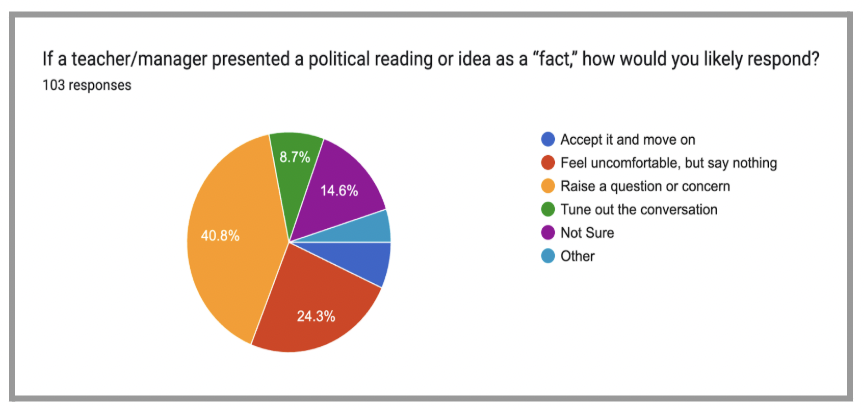
Chart 3
When asked what would make them more likely to engage in political conversations, respondents most frequently selected options such as a more neutral or moderated space, assurance of no judgment, greater ideological balance, and a clearer connection between the political content and the subject matter at hand. These responses indicate that individuals are not inherently opposed to political discussion but are highly sensitive to the context in which it occurs. Open-ended comments further emphasized this point, with many participants underscoring the importance of structured dialogue, respectful disagreement, and the ability to voice minority perspectives without fear of reprisal. One respondent reflected, “I strongly believe there is value in having these conversations, but only if every voice feels comfortable and safe expressing their views, especially if their views are separate from those of their professor and peers.” Chart 4 visually reinforces these findings, showing that respondents were most encouraged to participate when discussions were held in moderated, nonjudgmental, and ideologically balanced spaces, with a clear link between political content and the subject matter at hand.
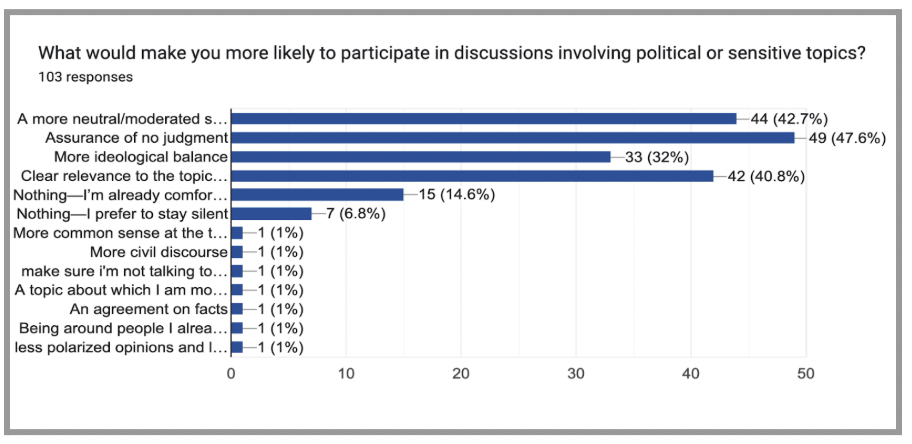
Chart 4
The data also revealed a perception among respondents that political dialogue has become increasingly performative or polarized. Several comments referenced a lack of genuine engagement or nuance, stating that participants often “just recycle talking points” or that “people only speak up when they’re surrounded by like-minded individuals.” This climate discourages exploratory thinking and deep engagement, and instead fosters ideological echo chambers. One respondent noted, “Politics has become too polarized. Everyone has their mind made up one way or the other, and constructive conversation is few and far between.”
These findings carry implications for academic and professional institutions that aim to promote open dialogue. Facilitators, whether professors, managers, or discussion leaders, must be aware of how their framing, tone, and ideological positioning influence who feels safe to speak. Simply encouraging open dialogue is insufficient; institutions must intentionally create conditions where a broad range of perspectives can be expressed without fear of judgment or marginalization. This includes establishing clear expectations for respectful disagreement, ensuring ideological diversity in course content and workplace programming, and adopting discussion formats that support balanced participation.
Still, it is important to consider a potential critique: that calls for neutrality, civility, or moderation in political discourse might reflect a conservative or exclusionary impulse. However, the conclusions drawn here are grounded in consistent patterns across ideological lines. The survey data reveal that respondents identifying as left-leaning, centrist, and right-leaning alike described environments where ideological dominance discouraged dissent and suppressed engagement. The desire for neutral or moderated spaces did not stem from an effort to shield dominant views, but from a broad concern that political discourse in shared settings often feels exclusionary, performative, or morally prescriptive. In fact, several left-leaning respondents reported similar discomfort when prevailing narratives seemed to foreclose critical engagement or stigmatize disagreement. Interpreting these preferences as inherently conservative overlooks the diversity of perspectives reflected in the data. Rather than reinforcing existing power structures, the call for more inclusive and balanced environments reflects a fundamentally democratic concern: ensuring that all individuals feel safe and respected in contributing to complex political conversations. It is this commitment to openness, not ideological alignment, that underpins the conclusions of this study.
Several limitations must be acknowledged. The survey sample was not random and included a disproportionate number of university-affiliated respondents, which may have influenced the ideological distribution and generalizability of the findings. Additionally, the data relies on self-reporting, which may be subject to social desirability bias or selective memory. A few respondents identified as “Other,” suggesting the inclusion of perspectives from individuals who may be unemployed, retired, or working outside traditional institutions - groups that warrant further attention in future research. Future studies could also explore these dynamics using larger and more representative samples, and could benefit from qualitative interviews or controlled experiments that examine how specific interventions affect engagement with political content.
In conclusion, the data reveals that political discussions in shared spaces are marked by a tension between visibility and silence. While such conversations occur with some frequency, meaningful engagement is often hindered by perceived ideological dominance and fear of social consequence. Over 100 participants across the political spectrum indicated a desire for more neutral, moderated, and inclusive environments that allow for thoughtful expression without personal risk. If institutions aim to cultivate genuinely open dialogue, they must move beyond rhetorical commitments to openness and begin implementing structures that make such dialogue possible.
*Originally Published April 21, 2025. Updated January 25, 2026.
Interoperability, Innovation, and Expansion: Policy Dynamics in Healthcare Technology
This research examines how regulatory frameworks and institutional policy environments shape technological adoption and expansion in healthcare systems. It explores how interoperability requirements, institutional incentives, and regulatory structures influence technological governance.
Policy Analysis and Impact
Operational health technology platforms operate at the crossroads of hospital operations, public health infrastructure, and digital health transformation. As such, these companies are uniquely impacted by a wide range of health policy frameworks that span federal mandates, state regulations, and evolving compliance standards in health information technology. Key among these policies are the 21st Century Cures Act, CMS interoperability regulations, HIPAA, and competition law enforcement within the health IT market. Together, these policies shape not only the systems these platforms build but also the ways in which they interact with clients, integrate with existing infrastructure, and contribute to broader policy goals such as health equity, data accessibility, and operational efficiency.
Interoperability and the 21st Century Cures Act
The most important policy framework currently influencing digital health is the 21st Century Cures Act, signed into law in 2016. A major provision of this law targets information blocking and mandates widespread interoperability in electronic health information systems. The Office of the National Coordinator for Health Information Technology (ONC) further operationalized this law through the Cures Act Final Rule, which came into effect in 2021. This rule requires that certified health IT developers, healthcare providers, and networks make patient data accessible in a secure and standardized format, specifically through open APIs using Fast Healthcare Interoperability Resources (FHIR).
For operational health technology vendors that build platforms supporting hospital command centers, patient throughput, and bed management, these rules mean that the systems they design must integrate seamlessly with existing electronic health record (EHR) platforms without obstructing data flow. Moreover, the systems must be built in a way that supports patients’ rights to access their own health information. Although these vendors are not EHR providers, their tools sit adjacent to EHR systems, often exchanging operational and clinical data in near real-time. Therefore, interoperability is not a peripheral feature but a core requirement. Compliance with these mandates is necessary for product viability, especially as health systems grow increasingly wary of vendor lock-in and noncompliant platforms.
CMS Interoperability and Patient Access Rules
The Centers for Medicare and Medicaid Services (CMS) introduced complementary rules that extend the goals of the Cures Act to payers and healthcare delivery organizations. The CMS Interoperability and Patient Access Final Rule, released in 2020, mandates that Medicare Advantage, Medicaid, and CHIP managed care plans provide patients with digital access to their records through FHIR-based APIs. These rules also require payer-to-payer data exchange and support for provider directories to enhance care coordination.
Although CMS policies are more directly applicable to insurers and clinical providers, they have downstream implications for operational health technology vendors. Hospitals must ensure that their technology stack enables the data flows required under these rules. If a hospital is unable to exchange the necessary data due to infrastructure limitations, they may face regulatory consequences or be disqualified from participating in certain CMS programs. These platforms must therefore support these objectives, even if indirectly, by ensuring that patient and operational data can be exported, integrated, and reported in compliance with CMS standards.
Health IT Competition and Antitrust Oversight
A growing area of policy concern is the consolidation of the health IT market, particularly within the EHR sector. Vendors such as Epic and Oracle Cerner hold significant market share, and their platforms often create high switching costs or impose technical limitations on third-party integrations. These practices can stifle innovation and restrict patient access to their own data. In response, the Federal Trade Commission (FTC) and Department of Justice (DOJ) have increased scrutiny of health IT mergers and contractual practices that limit data interoperability.
This trend may benefit operational health technology vendors. Unlike traditional EHR companies, these firms often offer operational and logistical tools that complement clinical records rather than replace them. Their neutral position in the EHR ecosystem may become more attractive to health systems that are under pressure to avoid vendor lock-in and to diversify their health IT partnerships. Regulatory support for increased competition could enable these vendors to expand their footprint within hospitals and position themselves as compliance-friendly alternatives to larger, more restrictive platforms.
HIPAA and Privacy Compliance
While policies such as the Cures Act push for open data exchange, the Health Insurance Portability and Accountability Act (HIPAA) continues to define the boundaries of privacy and security in healthcare. HIPAA requires that all entities handling protected health information implement appropriate safeguards to ensure data confidentiality, integrity, and availability. For companies working with hospitals, any tool that stores, transmits, or processes health data must be HIPAA compliant.
Operational health technology systems often deal with sensitive data, such as patient admissions, transfers, and discharges. Even when this data is not tied directly to a diagnosis or clinical procedure, it may still qualify as protected health information under HIPAA. Compliance must therefore be built into the architecture of all tools. Role-based access, audit trails, encryption protocols, and secure hosting environments are all essential components. As vendors expand into more advanced uses of predictive analytics or artificial intelligence, additional attention will need to be paid to how these technologies intersect with evolving privacy standards.
Artificial Intelligence and Emerging Governance
Many operational health technology vendors are beginning to incorporate artificial intelligence into hospital operations. While AI in healthcare is still lightly regulated in the United States, federal agencies are beginning to release guidance. The Food and Drug Administration (FDA), for example, has proposed a framework for regulating software as a medical device, which could potentially cover AI tools that influence clinical or operational decisions. The National Institute of Standards and Technology (NIST) and the ONC have also released guidance around algorithm transparency, fairness, and reproducibility.
For vendors in this space, this is a rapidly evolving area. AI tools used to optimize staffing, predict bed availability, or anticipate patient surges must be explainable and evidence-based. Hospitals will likely demand regulatory clarity and documentation showing that algorithms do not reinforce bias, breach patient privacy, or cause operational harm. As AI becomes more central to these platforms’ value propositions, staying ahead of federal and state-level guidance will be critical.
Reflections and Strategic Perspective
Based on this analysis, the current regulatory environment provides operational health technology vendors with a unique opportunity to grow, provided that they continue to align their products with federal priorities around interoperability, equity, and data transparency. While some may view compliance obligations as burdensome, they can also serve as strategic differentiators. Companies that are agile, standards-compliant, and open to integration are increasingly preferred by hospitals navigating complex vendor landscapes.
A recent article in Health Affairs supports this view. The authors argue that interoperability mandates have not only improved patient data access but also catalyzed a shift in how health systems evaluate their IT vendors (Adler-Milstein et al., 2022). Health systems are moving away from all-in-one solutions and are instead creating modular environments where best-in-class tools can coexist. In such an environment, vendors that specialize in operational visibility and logistical command centers can provide distinct value without having to compete directly with EHR giants.
There is also strong evidence that hospitals are increasingly prioritizing operational efficiency and system-wide coordination in response to capacity pressures. A study published in The New England Journal of Medicine Catalyst found that patient flow optimization can improve not only bed utilization but also staff morale and patient outcomes (Haas et al., 2021). Operational health technology platforms are well positioned in this space. Their tools address real logistical bottlenecks in hospital settings, and the broader policy environment now actively encourages the use of data-driven solutions.
At the same time, vendors will need to pay close attention to emerging debates around the ethical use of AI in hospital operations. While these platforms may not make clinical decisions directly, their algorithms may influence how resources are allocated, how patients are prioritized, and how staff are deployed. These are sensitive areas. As AI oversight evolves, there may be calls for greater algorithm transparency and accountability, even outside of traditional clinical use. Hospitals are becoming more aware of these issues, especially after high-profile incidents involving biased algorithms in care delivery models (Obermeyer et al., 2019). Vendors should be proactive in disclosing how their models are built, validated, and monitored to ensure they do not unintentionally exacerbate inequities.
Finally, continued investment in comparative policy research will be important. Health systems globally are experimenting with different ways of governing digital health, and U.S. regulators often look abroad when crafting new frameworks. Staying informed about how other countries are regulating data sharing, digital infrastructure, and AI could help vendors anticipate changes at home.
International Policy and Emerging Considerations
Operational health technology vendors increasingly operate across multiple countries, including the United States, the United Kingdom, Canada, and Germany. Each of these markets presents unique regulatory landscapes that influence how health technologies are developed, certified, and integrated into public systems. In each jurisdiction, policies governing data exchange, privacy, reimbursement, and digital infrastructure pose both opportunities and challenges for expansion.
United Kingdom
The United Kingdom offers a particularly interesting environment for operational health technologies. The National Health Service (NHS), as a publicly funded and centrally coordinated healthcare system, has made clear commitments to digital transformation. In recent years, the NHS has piloted and expanded the use of real-time hospital command centers to manage patient flow, reduce waiting times, and coordinate emergency response.
UK digital health policy is primarily shaped by NHS England and the Department of Health and Social Care. NHS Digital (now merged into NHS England) previously released blueprints for digital maturity and interoperability that emphasize open APIs, structured data exchange, and real-time dashboards. These align closely with the operational tools these vendors provide. For example, the NHS Data Services Platform and Federated Data Platform initiatives create the infrastructure for shared visibility across hospitals and care settings, capabilities that operational command platforms are well designed to support.
However, the United Kingdom also poses significant regulatory expectations. The UK General Data Protection Regulation (UK GDPR), which mirrors the EU GDPR in many respects, sets high standards for data protection, consent, and transparency. Systems must be carefully configured to meet these expectations, especially when handling sensitive operational data linked to patient care pathways. In addition, the NHS often acts as both the funder and the regulator, meaning that digital tools must pass rigorous assessments on usability, safety, and cost-effectiveness before being adopted at scale.
Expanding further in the UK may require deeper engagement with national frameworks such as the NHS Innovation Service, which helps health technology developers navigate regulatory approvals. Demonstrating a strong commitment to transparency, patient safety, and public value will be essential in gaining trust within the highly centralized and policy-driven NHS environment.
Canada
Canada’s healthcare system is decentralized, with health technology procurement and policy decisions largely made at the provincial level. Each province operates under its own legislation governing health data privacy and system integration. For example, Ontario enforces the Personal Health Information Protection Act (PHIPA), while Alberta follows the Health Information Act. These laws are similar in scope to HIPAA but often emphasize the public stewardship of health data.
Despite provincial fragmentation, there is a national movement toward more coordinated digital infrastructure, led by Canada Health Infoway. Infoway’s goals include promoting interoperability, e-referrals, and real-time access to hospital resource data, all of which align well with operational health technology platforms. In addition, Canada has invested in digital tools to address hospital overcrowding, delayed discharges, and long emergency department wait times.
The main challenge for expansion in Canada lies in the need to tailor compliance and integration strategies to each province. Vendor approval processes, procurement requirements, and IT architecture standards may vary significantly across regions. However, once established, partnerships with regional health authorities or hospital networks can provide a reliable and scalable path forward.
Germany
Germany’s regulatory approach to digital health is grounded in a legal and technical structure that combines innovation support with strict oversight. The country’s Digital Healthcare Act (Digitale-Versorgung-Gesetz), passed in 2019, created a formal reimbursement pathway for digital health applications. However, much of this support has focused on patient-facing tools rather than hospital operations. For operational health technology vendors, entering the German market means navigating both data protection under the European Union’s General Data Protection Regulation (GDPR) and health IT certification requirements set by national authorities.
Data privacy in Germany is particularly strict. Any platform that collects or processes health-related data must undergo thorough data protection impact assessments and ensure full GDPR compliance. Hosting data locally within the European Union is often required. Integration with Germany’s telematics infrastructure and electronic patient record (ePA) systems may also be necessary, depending on the scope of services provided.
Despite these regulatory complexities, Germany represents a valuable opportunity. The country’s hospitals are actively seeking operational solutions to improve efficiency and adapt to changing demographics. Strengths in bed management, staff coordination, and discharge planning could serve these needs well if adapted to German specifications. Strategic partnerships with health insurers, public hospital consortia, or medical universities could provide a pathway into the market while meeting local regulatory expectations.
Other Emerging and Cross-Border Policies
Beyond these three countries, broader policy developments across jurisdictions may influence how operational health technology vendors expand or adapt their product offerings. Notable among these are the following:
In the United States, emerging rules around artificial intelligence oversight, particularly from the FDA and ONC, may begin to define expectations for algorithm transparency and validation in non-clinical systems.
The European Commission’s proposed Artificial Intelligence Act, while not yet finalized, is expected to introduce risk classifications and oversight requirements for health-related algorithms. If enacted, this would apply to any vendor offering AI-driven hospital operations tools in EU countries.
Ongoing debates around hospital price transparency, public reporting of operational metrics, and CMS value-based care reforms may create both challenges and opportunities for analytics platforms that measure or display hospital performance.
In Australia, recent updates to the National Digital Health Strategy and the expansion of the My Health Record platform indicate a growing market for tools that support system-level coordination, which may make it a future candidate for TeleTracking expansion.
Policymakers in Hong Kong and Singapore are also advancing hospital integration strategies through smart hospital initiatives and real-time dashboards, presenting another area for potential research and engagement.
Staying ahead of these developments will require continuous monitoring of legislative agendas, public consultations, and regulatory agency activity. In addition, participating in working groups, public health coalitions, or standards bodies may help vendors not only adapt to policy but also contribute to shaping it.
*Note: This brief was originally developed as a case-based analysis of an operational health technology platform. The version presented here has been generalized to focus on sector-wide policy dynamics while preserving the underlying regulatory analysis.
Rethinking Recycling: Climate Consequences and the Case for Ecobricks in the United States
This research examines how regulatory frameworks and institutional incentives shape environmental outcomes. It analyzes how policy design influences behavioral participation and institutional effectiveness in addressing environmental challenges.
Climate change remains a pressing global issue, largely driven by unsustainable production, consumption, and waste management practices. In the United States, the public perception of recycling as a solution to environmental degradation is deeply embedded in civic behavior and national policy. However, this perception often conceals the harsh reality that much of what Americans place into recycling bins never reaches a second life. Despite decades of campaigns promoting recycling, the United States recycles only about five to six percent of its plastic waste, with the remainder either landfilled or incinerated (Greenpeace USA, 2022). The gap between intention and outcome not only undermines public trust in sustainability efforts but also exacerbates the climate crisis by continuing the cycle of fossil fuel extraction for new plastic production.
This systemic failure in the United States' recycling infrastructure necessitates a critical examination of alternative strategies for managing plastic waste. One such alternative, the ecobrick, presents a grassroots solution that encapsulates both physical and educational benefits. Ecobricks are densely packed plastic bottles filled with non-recyclable soft plastics, used to create modular building materials. They serve a dual purpose: removing plastic from ecosystems and acting as tools for environmental awareness and behavioral change. While not a panacea, ecobricks offer an opportunity to redirect consumer responsibility into more meaningful climate action. This paper argues that the failure of conventional recycling systems in the United States not only hinders progress on climate change but also necessitates the exploration of community-driven innovations like ecobricks, which offer both environmental and structural benefits in the context of carbon reduction.
One critical, often overlooked dimension of the recycling crisis is the role of corporate lobbying and the petrochemical industry in shaping public policy. Major fossil fuel companies have historically supported campaigns promoting recycling as a solution to plastic pollution, despite being aware of its technical and economic limitations. By promoting consumer-focused solutions like recycling, these companies deflect attention from upstream accountability and maintain demand for virgin plastic, which is a lucrative byproduct of oil and gas refining. As a result, policies that could limit single-use plastics or introduce producer responsibility measures face strong resistance. This political inertia reinforces the status quo and restricts innovation in both policy and infrastructure, allowing plastic production to continue nearly unchecked (Greenpeace USA, 2022).
The decline in effective recycling in the United States can be attributed to multiple systemic flaws, including economic disincentives, lack of infrastructure, and poor public education on material sorting. After China's 2018 ban on importing foreign plastic waste, the United States faced a sharp reduction in markets for its recyclables, revealing a heavy dependence on overseas processing (EPA, 2020). Prior to this, the country exported a significant portion of its plastic waste, often without transparency regarding its final destination. Following the ban, domestic processing systems struggled to adapt, and many materials that had previously been collected for recycling were rerouted to landfills or incinerators. According to the Environmental Protection Agency (2020), only 8.7 percent of plastics were recycled in 2018, while over 75 percent ended up in landfills and nearly 16 percent were combusted for energy recovery. This shift not only wastes materials but significantly contributes to greenhouse gas emissions, especially when incineration is used as a fallback method.
The consequences of this inefficiency are environmental as well as psychological. When citizens believe they are contributing to sustainability by recycling, only to learn that their efforts are ineffective, disillusionment and apathy may result. Furthermore, continued reliance on ineffective systems delays more impactful policy shifts, such as mandatory producer responsibility or bans on single-use plastics. It also allows for the continued growth of virgin plastic production, which is projected to rise even as global climate goals demand steep emissions reductions. This dissonance between belief and impact highlights the urgent need for alternative strategies that can reduce waste, contain non-biodegradable materials, and empower individuals to participate in real climate solutions.
Another important consideration is the intersection of environmental justice and waste management. Landfills and incinerators are disproportionately located in low-income communities and communities of color, which means that the environmental and health consequences of inadequate recycling systems are not distributed equally. These communities are more likely to experience air pollution, water contamination, and other hazards associated with waste processing. In this context, ecobricks offer not only an environmental benefit but also a justice-oriented one. By reducing the volume of waste sent to polluting facilities, they can alleviate some of the burden borne by marginalized populations. When implemented with community input and equitable resource distribution, ecobrick projects can foster environmental empowerment and resilience in under-resourced areas (MIT, 2023).
Ecobricks are hand-crafted modular units created by compressing clean and dry, non-recyclable plastic waste into plastic bottles. This method represents a decentralized, low-cost approach to mitigating the environmental impact of synthetic waste, particularly in areas where formal recycling systems are ineffective or absent. The process involves collecting soft plastics such as food wrappers, chip bags, and multilayered films, which are commonly excluded from municipal recycling programs due to contamination or their complex composition. After cleaning and drying the materials, individuals use simple tools to compact them into polyethylene terephthalate bottles until the container becomes firm and structurally stable. According to Akinrata et al. (2021), the resulting bricks are strong enough for use in small-scale construction, including benches, walls, and modular furniture. This hands-on approach contrasts with industrial recycling systems, which consume substantial energy and often contribute to greenhouse gas emissions. Ecobricks, by comparison, immobilize plastic waste without additional processing. From a systems-thinking perspective, the practice aligns with sustainability education principles by integrating ecological awareness with participatory learning and tangible outcomes.
The functional value of ecobricks extends beyond their utility as construction materials. As a form of plastic sequestration, they contain and stabilize materials that would otherwise contribute to environmental degradation through incineration, landfill accumulation, or leakage into marine systems. This containment transforms waste into a usable resource, which is consistent with principles from circular economy frameworks that emphasize reuse and redesign rather than disposal. Additionally, the manual labor required in creating ecobricks invites participants to engage in reflective environmental behavior. Handling personal waste in a sustained, physical manner fosters a deeper understanding of material lifecycles and often leads to reductions in overall consumption. Akinrata et al. (2021) suggest that the educational applications of ecobricking promote long-term behavioral change, particularly when integrated into community-based sustainability programs. Rather than depending solely on top-down solutions, ecobricks exemplify a model in which local knowledge, individual agency, and environmental literacy intersect to create meaningful climate action at the grassroots level.
From an engineering perspective, ecobricks have shown promising mechanical properties. A comparative study by Nguyen and Le (2022) found that PET bottle bricks, when used properly, can rival the strength of some conventional masonry units. While not suitable for high-rise construction, they offer viable options for low-cost housing, temporary shelters, and community structures, especially in disaster-prone or resource-scarce regions. Their use in humanitarian architecture demonstrates both feasibility and climate alignment, especially when considering the embodied carbon of traditional bricks and concrete. The production of one ton of concrete releases over 900 kilograms of carbon dioxide, whereas ecobricks contribute almost none, since the plastic has already been manufactured and is simply being repurposed (Singh et al., 2020).
Ecobricks also represent a shift in how society conceptualizes responsibility for waste. Rather than relying on municipal systems or foreign nations to process materials, ecobricking places the burden, and the opportunity, into the hands of individuals and local groups. This fosters a sense of agency and can contribute to broader behavioral change, including reductions in plastic use and increased environmental literacy. In regions where recycling infrastructure is lacking or broken, ecobricks can act as both an interim waste solution and a catalyst for community dialogue on sustainability. According to MIT (2023), one of the core challenges facing the U.S. recycling model is the disconnection between production and accountability. Ecobricks provide a means of reconnecting the public with the consequences of consumption, one bottle at a time.
The educational potential of ecobricks is another valuable aspect of their implementation. In schools, environmental workshops, and youth centers, the process of creating ecobricks introduces participants to concepts of material lifecycle, carbon footprint, and civic responsibility. Unlike abstract discussions about climate change, ecobricking is tangible and visual. It reveals just how much plastic one person can generate in a short time. This visibility can catalyze deeper engagement with sustainability efforts, especially among young people. The act of ecobricking can also be incorporated into broader environmental curricula, connecting local action with global challenges. Educators have found that students who participate in ecobrick making often begin reducing their plastic use and engaging family members in waste audits and reuse practices (Akinrata et al., 2021).
In addition to educational benefits, ecobricks reflect a practical application of environmental behavior change theory. This theory suggests that direct engagement with environmental problems, especially through experiential learning, leads to increased motivation and long-term adoption of sustainable practices. When individuals physically interact with their own waste through ecobrick production, they not only contribute to the reduction of plastic pollution but also undergo a cognitive shift in how they perceive consumption. This behavioral transformation is supported by academic frameworks such as the Theory of Planned Behavior, which highlights the role of perceived behavioral control in shaping intentions. The simple act of making an ecobrick fosters a sense of agency and efficacy, reinforcing environmentally conscious decision-making. Moreover, when applied within collective settings, such as classrooms or community groups, ecobricking can strengthen social norms around sustainability and create lasting cultural shifts toward environmental responsibility.
From a global perspective, ecobricks are part of a larger movement to decentralize waste management and empower local solutions. In countries such as the Philippines, South Africa, and Guatemala, ecobricks have been widely adopted as part of community resilience strategies. These regions often lack the infrastructure for conventional recycling and instead rely on manual, low technology methods that are adaptive to local conditions. The success of these programs illustrates the potential scalability of ecobricks, especially in areas where centralized policy interventions are slow to materialize. Grassroots ecobrick networks have produced comprehensive guides, quality control standards, and tracking systems, helping to professionalize what began as a volunteer movement. In doing so, they demonstrate that effective environmental practices need not wait for government action but can emerge organically through collective effort (Nguyen & Le, 2022).
Solving the climate crisis requires a multi-pronged strategy that includes structural reform, technological innovation, and behavioral change. While ecobricks alone will not reverse the damage caused by plastic overproduction and ineffective recycling, they exemplify the type of holistic thinking necessary to build a sustainable future. Their value lies not only in the plastic they contain but in the conversations and collaborations they inspire. As part of a broader suite of interventions, including bans on non-recyclable packaging, investment in closed loop recycling systems, and education reform, ecobricks offer an immediate, accessible, and educational tool for addressing both waste and climate concerns. A reimagined recycling paradigm must move beyond the illusion of circularity and embrace strategies that are grounded in both environmental science and social equity (Singh et al., 2020).
Works Cited
Akinrata, S. A., Aramide, F. O., Adekunle, O. J., & Nwobodo, S. A. (2021). Assessment of plastic bottle bricks for sustainable shelter construction. Journal of Building Engineering, 43, 102568.
Environmental Protection Agency. (2020). Advancing sustainable materials management: 2018 fact sheet.
Greenpeace USA. (2022). Circular claims fall flat again: U.S. plastic recycling rate declines to about 5%.
Massachusetts Institute of Technology. (2023). Why plastic recycling doesn’t work in the U.S. MIT Environmental Solutions Initiative.
Nguyen, T. H., & Le, D. H. (2022). Comparative study of mechanical properties of plastic waste bricks and conventional concrete bricks. Construction and Building Materials, 314, 125585.
Singh, R., Sharma, A., & Kumar, M. (2020). Life cycle assessment of plastic bricks made from post-consumer plastic waste. Resources, Conservation & Recycling, 161, 104925.